

The geopolitical chessboard of the Middle East is in perpetual flux, but rarely does a nation face a strategic choice as profound and potentially transformative as the one currently confronting Iran. As 2026 unfolds, the Islamic Republic stands at a crossroads, with two starkly different paths emerging from its historical and cultural landscape: the Abraham Accords and the nascent, yet powerfully symbolic, Cyrus Accords. Both represent pathways to regional integration and economic prosperity, but they demand fundamentally different approaches to foreign policy, national identity, and engagement with the world.
The Allure of the Abraham Accords: Normalization and Integration
The Abraham Accords, initiated in 2020, have fundamentally reshaped the Arab-Israeli dynamic. They represent a pragmatic alignment of shared strategic interests, primarily focused on economic development, technological cooperation, and a common front against regional destabilizers (often implicitly referring to Iran itself). For Iran, engaging with an expanded Abraham Accords framework would entail a monumental shift, characterized by:
- Normalization with Israel: This is the most significant and, for many in Iran’s current establishment, the most contentious step. It would require Tehran to abandon its decades-long policy of non-recognition and actively pursue diplomatic, economic, and security ties with Jerusalem. This would involve a re-evaluation of its support for various non-state actors in the region.
- Economic Bonanza: Joining the Abraham Accords would unlock unprecedented economic opportunities. Iran, with its vast natural resources, educated populace, and strategic location, could become a major beneficiary of regional trade, investment, and infrastructure projects. Imagine Iranian goods flowing freely through the Gulf states, leveraging Israeli tech, and participating in pan-regional energy grids. The current UN and unilateral sanctions, which have crippled Iran’s economy, could be gradually unwound as Iran demonstrated a commitment to regional peace and stability.
- Technological Leap: Israel is a global leader in cybersecurity, water management, agricultural technology, and venture capital. Direct engagement could provide Iran with critical access to innovations necessary for modernizing its economy, addressing environmental challenges, and creating new industries, potentially transforming its stagnant sectors.
- Security Re-calibration: While controversial, normalization could lead to a re-evaluation of regional security architecture. Instead of being viewed as a primary threat, Iran could become a partner in addressing issues like counter-terrorism, maritime security, and regional stability. This would require confidence-building measures and a significant reduction in bellicose rhetoric.
The challenge for Iran in pursuing the Abraham Accords lies in the profound ideological shift it would demand. The very foundation of the Islamic Republic’s revolutionary identity has been built, in part, on opposition to Israel and its allies. Overcoming this entrenched ideology would require immense political will and a willingness to confront internal dissent.
The Promise of the Cyrus Accords: A Vision of Persian Grandeur and Regional Leadership
Alternatively, Iran could embark on a path we might term the Cyrus Accords. This hypothetical framework, drawing inspiration from the ancient Persian Empire under Cyrus the Great, envisions Iran as a benevolent regional hegemon, leading a confederation of states bound by cultural ties, historical legacy, and shared economic interests, without necessarily normalizing relations with Israel. This path would emphasize:
- Redefining Regional Alliances: Instead of joining the Abraham Accords, Iran would focus on solidifying its relationships with existing partners (Syria, Iraq, Hezbollah) and potentially forging new, non-aligned partnerships in the broader region (e.g., Central Asia, Caucasus) and beyond (China, Russia). This approach would leverage Iran’s “Axis of Resistance” into a more formalized, economically integrated bloc.
- Infrastructure and Trade Networks: The Cyrus Accords would see Iran investing heavily in its own infrastructure—ports, railways, pipelines—to become the undisputed transit hub of Eurasia. Projects like the International North-South Transport Corridor (INSTC) would take center stage, connecting India to Europe via Iran, bypassing traditional maritime routes. This would position Iran as an indispensable bridge between East and West.
- Cultural and Historical Diplomacy: This path would emphasize Iran’s rich Persian heritage, promoting cultural exchange, academic collaboration, and historical narratives that highlight Iran’s ancient role as a civilizational power. It would seek to unify the region under a banner of shared non-Western identity and historical resistance against external interference.
- Independent Security Architecture: Rather than aligning with existing security frameworks, the Cyrus Accords would involve Iran spearheading a new regional security dialogue, potentially including Russia and China, aimed at reducing the influence of Western powers. This would be predicated on a robust indigenous defense industry and a more assertive, independent foreign policy.
The challenge for Iran in pursuing the Cyrus Accords lies in convincing its neighbors, particularly the Sunni-majority Arab states, of its benevolent intentions. Historical rivalries, sectarian tensions, and concerns over Iran’s nuclear program and regional proxy activities would need to be addressed through concrete actions, not just rhetoric. Furthermore, this path risks continued international isolation if it is perceived as an attempt to undermine global norms or proliferate destabilizing technologies.
The Consequence of Choice: A New Regional Order
Iran’s decision between these two grand strategies will determine not only its own future but the shape of the entire Middle East for decades to come.
- Opting for the Abraham Accords would mean a revolutionary internal shift, a pragmatic embrace of current geopolitical realities, and potentially an end to decades of isolation. It would signify Iran choosing economic integration, technological advancement, and a shared future with former adversaries. Such a move would send shockwaves through the region, potentially leading to unprecedented stability and economic growth, but at the cost of abandoning core revolutionary tenets.
- Opting for the Cyrus Accords would mean solidifying a distinctive Iranian-led regional order, emphasizing self-reliance, historical identity, and a multipolar world vision. It could empower Iran to become a true Eurasian pivot, leveraging its geography and culture. However, it risks prolonging sanctions, deepening regional rivalries, and further entrenching the current geopolitical divides, potentially leading to continued cycles of tension and proxy conflicts.
As the international community watches, Iran holds the key to its own destiny. The choice is not merely between two foreign policy options, but between two visions of national identity, two pathways to prosperity, and two dramatically different futures for a nation steeped in history and yearning for a decisive role on the global stage. The coming years will reveal which rich choice Iran makes.
-
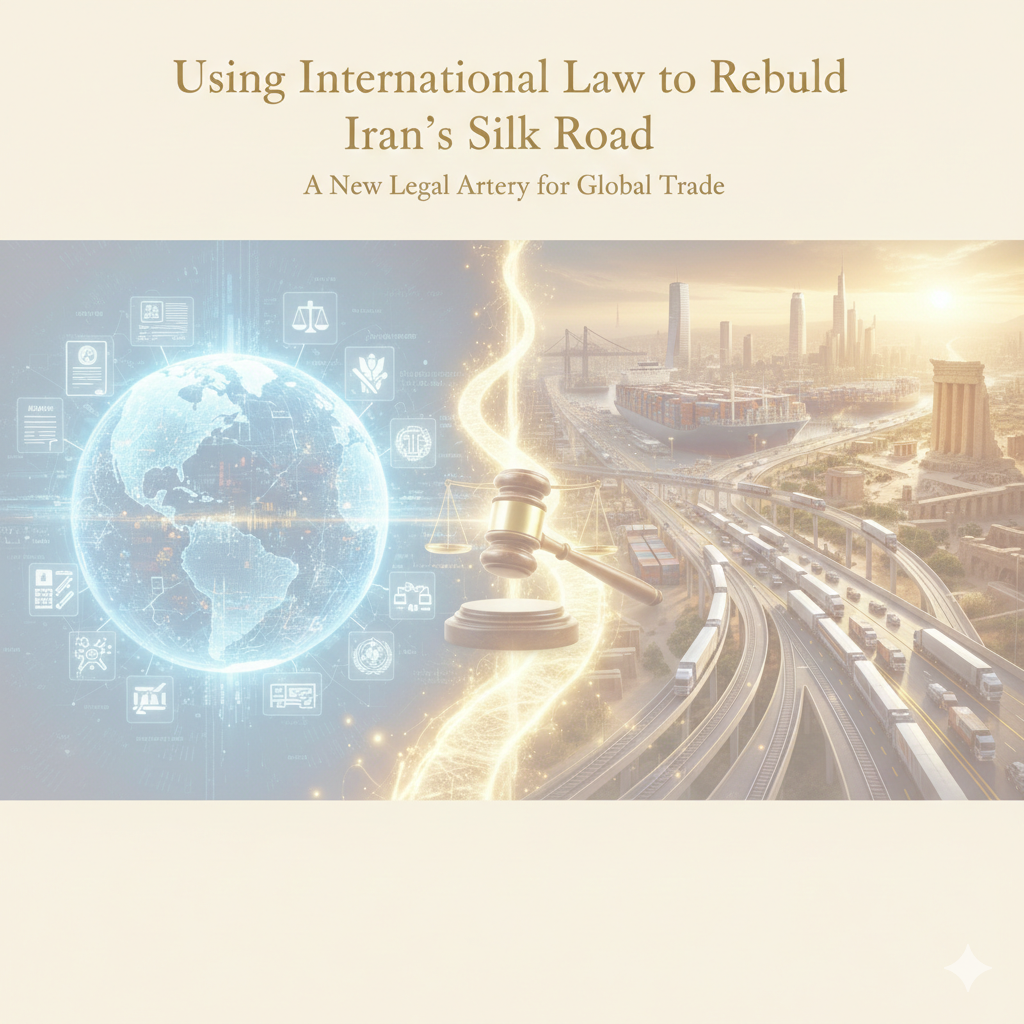
Using International Law to Rebuild Iran’s Silk Road
Iran, with its ancient Persian heritage, has historically been a pivotal crossroads of civilization, connecting…
-
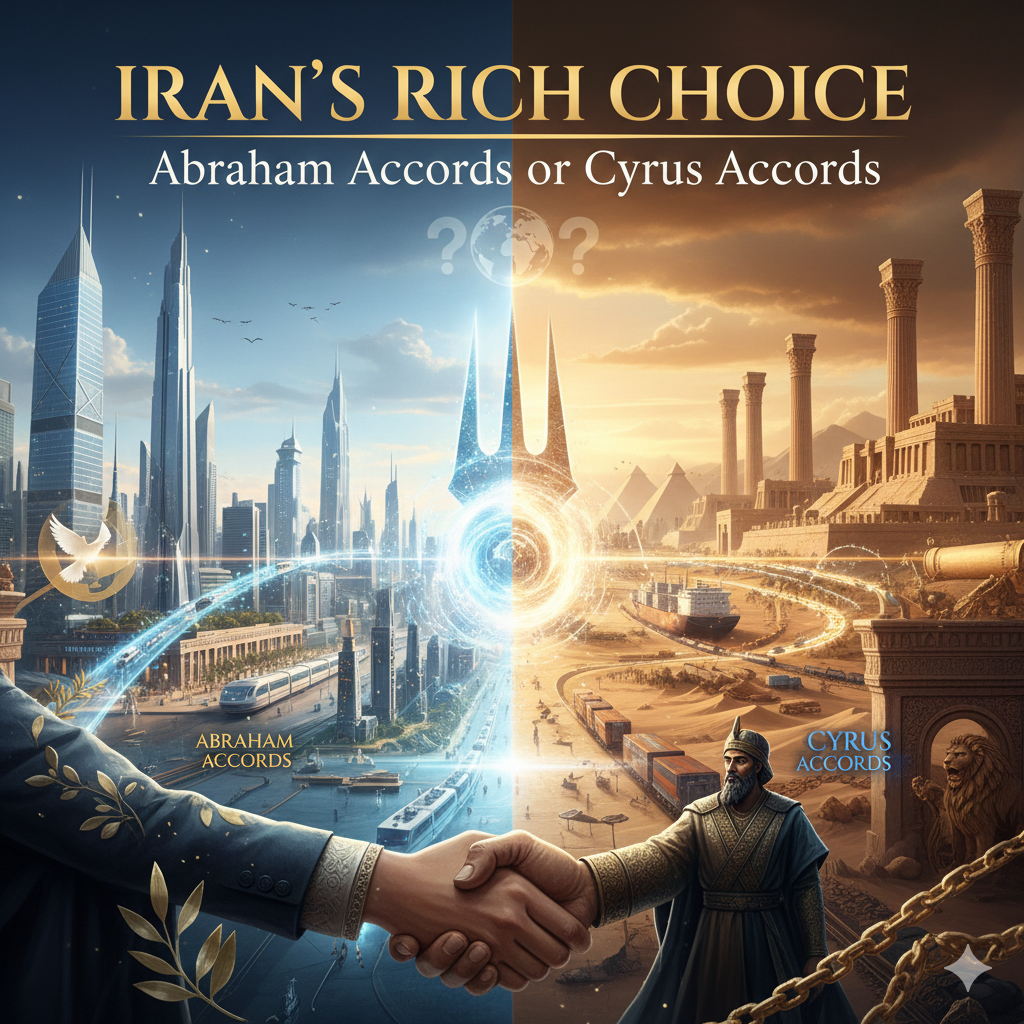
Iran’s Rich Choice: Abraham Accords or Cyrus Accords
The geopolitical chessboard of the Middle East is in perpetual flux, but rarely does a…
-

UN Sanctions and the Collapse of the JCPOA (2026)
As of February 2026, the international community has witnessed the most significant shift in global…